Copyright © [Surabhi Parashar] [2026]. All Rights Reserved. 1
Hello readers, how are you doing today?
I call my website “Mindful Echoes” because that’s how I want to live. I want to be present in each and every moment and make mindful choices every day. Ironically, being mindful and fully present in the moment is one of the most difficult things to do in our chaotic world. Yet we all try, don’t we?
Last week, I touched on mindfulness, and this week I’d like to continue the conversation by exploring another topic that is close to my heart: sustainability.
When we hear words like carbon footprint, climate change, or global warming, they often sound like distant environmental buzzwords. But if you think about it, they are really a reflection of how we live our daily lives. The choices we make, what we buy, how we travel, what we consume, and even what we throw away, all have an impact far beyond our homes.
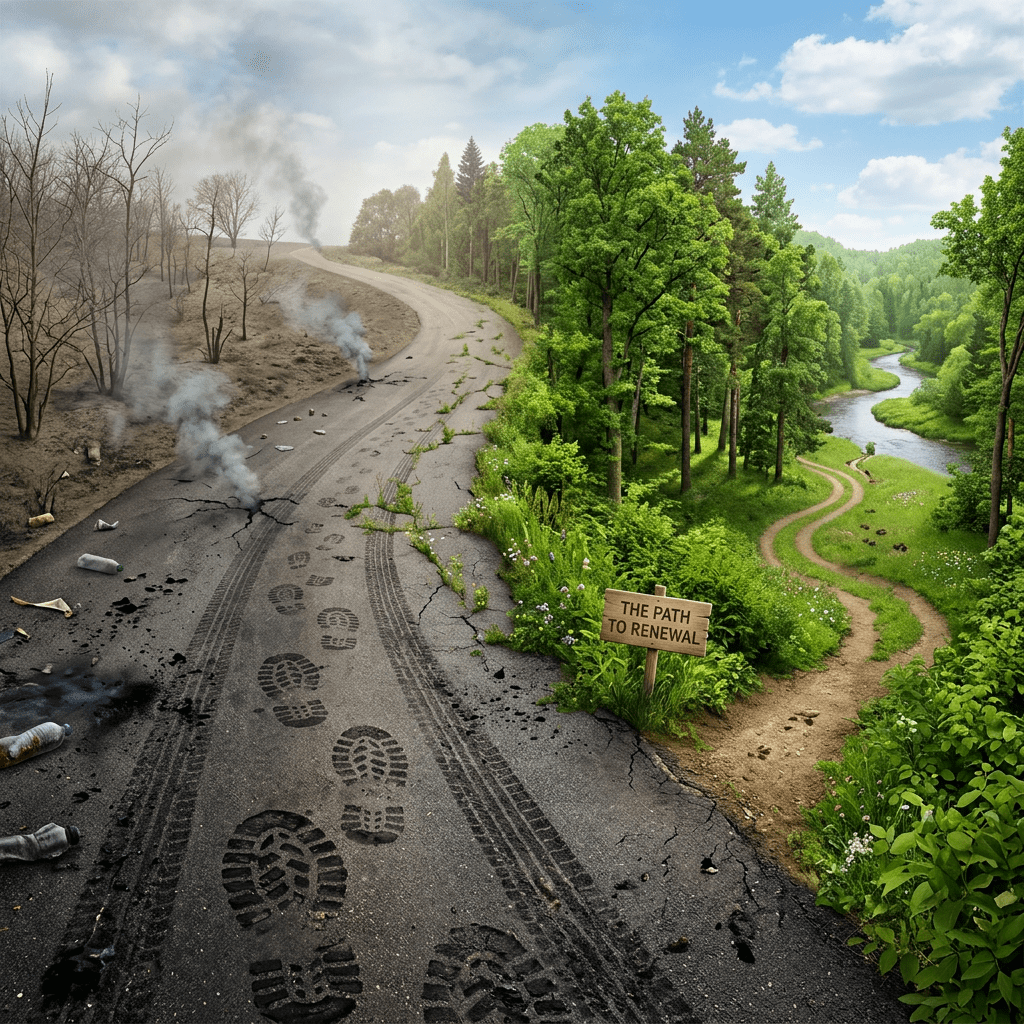
The Earth, in a way, keeps score. Rising temperatures, melting glaciers, and increasingly unpredictable weather remind us that our actions have consequences. The good news is that the future is not written yet. Small, mindful choices made by millions of people can add up to meaningful change. After all, sustainability isn’t about perfection; it’s about creating a future where both people and the planet can thrive.
Sometimes, I wonder what my carbon footprint would say about me if it could talk. Would it describe me as thoughtful and mindful, or would it reveal habits I’ve never stopped to question?
The truth is, convenience has become such a normal part of our lives that we rarely think about its cost. We order products with a click, drive short distances instead of walking, replace things instead of repairing them, and enjoy tropical fruits in winter without considering how far they travelled to reach our plates. The cost of convenience is often hidden, but the Earth keeps the score.
Nature is sending a message to us. A hotter summer, an unexpected flood, a wildfire on the news, or a winter that doesn’t feel quite like winter anymore. These events remind us that climate change isn’t a distant problem. It is happening now.
Yet sustainability doesn’t have to mean giving up everything we enjoy. Green isn’t just a color anymore; it’s a mindset. It’s about making thoughtful choices whenever we can.
Take my morning coffee, for example. Is my morning coffee warming the planet? Perhaps not on its own. But the disposable cup, the plastic lid, the transportation of coffee beans across continents, and the waste we generate every day all add up. The same is true for countless small decisions we make without a second thought.

This often leads to a bigger question: Can one person really make a difference?
I believe the answer is yes. Not because one person can solve climate change, but because change has always started with individuals. The power of small changes is often underestimated. Carrying a reusable water bottle, reducing food waste, choosing local products, turning off unused lights, repairing instead of replacing, or simply buying less are not dramatic actions. Yet multiplied across millions of people, they become powerful.
A greener tomorrow starts today, not through perfection but through awareness. Sustainability is not a competition to become the most eco-friendly person on the planet. It is a daily practice of asking, “Do I really need this?” and “Is there a better choice available?”
Earth is quite literally in our hands. Every purchase, every meal, every commute, and every habit contributes to the future we create. The planet is at a crossroads, and governments and corporations have an important role to play, too.
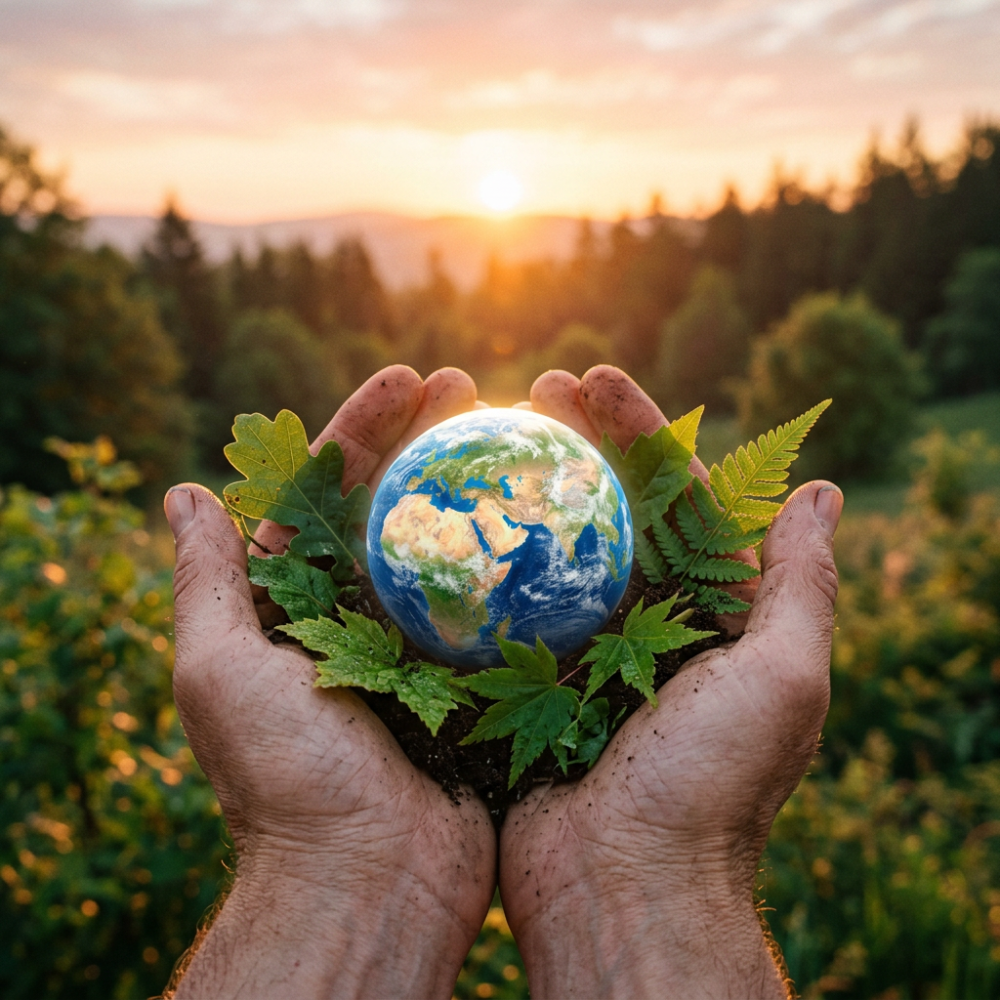
The responsibility cannot rest entirely on consumers. Governments and corporations manufacture the products we buy, shape the systems we depend on, and influence the choices available to us. With that power comes responsibility. It is not enough to encourage recycling; companies must also design products that can be repaired, reused, or genuinely recycled at the end of their life.
Too often, waste is simply moved out of sight rather than dealt with sustainably. Mountains of discarded electronics, clothing, and other consumer goods frequently find their way to poorer nations, where the burden of managing that waste falls on communities with fewer resources.
Meanwhile, many of us feel reassured that placing an item in a recycling bin or donation box has solved the problem. The reality is often far more complicated. While we do our part as consumers, governments and corporations must also be held accountable for creating systems that protect the planet rather than merely shifting the problem elsewhere.
From awareness to action, we can all take small steps toward a healthier planet. We can choose to consume less, waste less, and ask more questions of the systems that serve us. And when millions of people begin asking those questions, change becomes harder to ignore.
So today, I would like to leave you with a few thoughts. The next time you throw something away, consider this: Does “away” really exist, or has the problem merely been moved somewhere beyond your sight? Are your products sustainably resourced? Where do they come from and where do they end up?
The future isn’t something we inherit; it’s something we create, one choice at a time. This weekend, please ask yourself, ” Are you ‘Living Lightly on a Warming Planet?’ 😊
- Unauthorized use and/or duplication of this material without express and written permission from this blog’s author and owner is strictly prohibited. Excerpts and links may be used, provided that full and clear credit is given to [Surabhi Parashar] and [mindful-echoes.com] with appropriate and specific direction to the original content.
Copyright protection for computerized literary works applies automatically when a work is originally authored and fixed. ↩︎


Blessings to you as you continue encouraging others to live with purpose and mindfulness. 🙏
LikeLiked by 1 person
Thanks Willie 😊.
LikeLiked by 1 person
You are very welcome…
LikeLiked by 1 person